
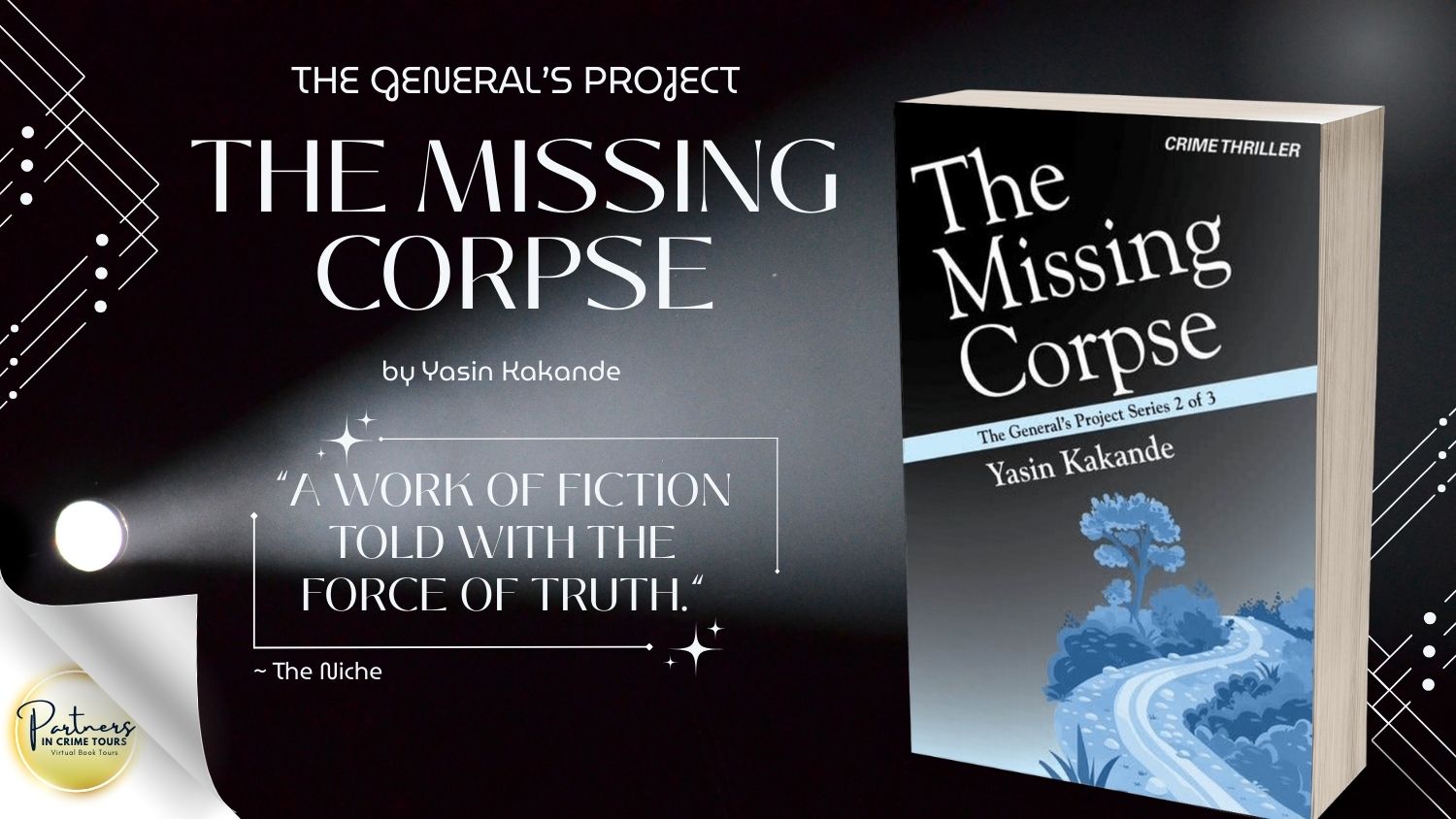
The Missing Corpse by Yasin Kakande
Book and Author Info + an Excerpt + an Author Guest Post + a Giveaway!
Don’t miss any Blog Tour Posts! Click the link here for more.
The Missing Corpse
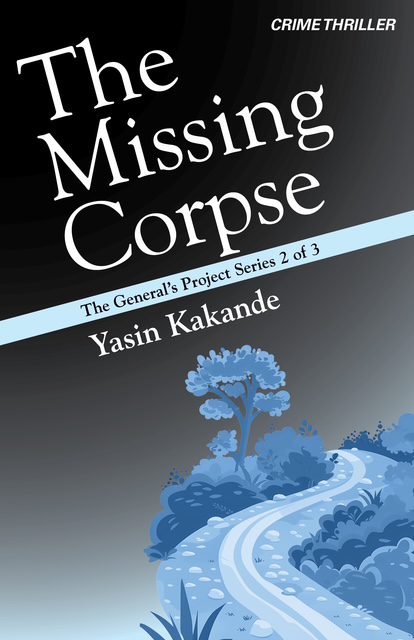
THE GENERAL’S PROJECT
The president is dead. His son’s pretending he’s not. And the corpse? Well, that’s missing.
When the CIA sniffs out whispers that an African general—who also happens to be the president’s darling son—may have murdered dear old dad and stashed the body like last week’s leftovers, they send in their best bloodhound: Agent Shawn Wayles. He’s good at two things—digging up dirt and getting shot at in places the U.S. swears it’s not involved.
This time, Shawn’s not alone. He’s paired with an LGBTQ couple who have more secrets than the Vatican and fewer moral brakes.
Their mission? Retrieve the dead president’s body from the general’s paranoid, trigger-happy security team.
Because in this twisted power struggle, it’s not the living who rule—it’s the guy in the coffin. And whoever has the corpse… controls the country.
Praise for The Missing Corpse:
“A work of fiction told with the force of truth.”
~ The Niche
“Right off the bat, I could tell this was going to be a dark read. There is a real sense of menace and threat from the get go… Thoroughly enjoyed this and will definitely be up for reading any future books.”
~ Donna Morfett, Goodreads Review
“I thought the plot was a fantastic idea and brilliantly written.”
~ Claire Ball, Goodreads Review
Book Details:
Genre: Crime Thriller
Published by: Black Writers Ink LLC
Publication Date: September 11, 2025
Number of Pages: 379
ISBN: 979-8990984448
Series: The General’s Project, Book 2
To purchase your copy of The Missing Corpse, click any of the following links: Amazon | Kindle | Barnes & Noble | BookShop.org | Goodreads | BookBub | Audible
Guest Post by the Author of The Missing Corpse — Yasin Kakande
Writing The Missing Corpse felt like opening a door you’re not sure you can close again. Sometimes what comes out smiles politely. Other times, it screams and knocks things over.
Shawn Wayles is a CIA agent from Massachusetts sent to Uganda on what Washington calls “a simple job.” He’s supposed to spy on a president’s son who has killed his own father and is now trying to take power without asking America first. That, as you can imagine, is a big no-no.
Of course, everything goes wrong. Very wrong.
Shawn ends up in a Ugandan prison so brutal it feels like a grave that hasn’t fully made up its mind. Washington panics. Plans are whispered, torn up, whispered again. Finally, they land on one ugly solution: a truck that carries corpses from the prison to the morgue.
There’s just one catch.
To get on that truck, Shawn has to be dead.
Not hospital-dead. Not peaceful-dead. These bodies are soaked in sweat, blood, fear, and other things you don’t want to imagine while eating. They’re the leftovers of what officials politely call “enhanced interrogations.”
So Shawn has to lie among them. Smell like them. Become one of them—without actually dying.
Can he do it? Can a living man convincingly play a corpse while death waits inches away?
That question sits at the heart of The Missing Corpse. It’s about survival, power, and the dark joke of politics—how close the living can get to the dead before the line disappears.
The Missing Corpse is the second book in my trilogy about imagining a peaceful transfer of power in an African country. I use storytelling like an X-ray, cutting through nice speeches and diplomatic smiles to expose the damp, rotten corridors of power stretching from Africa all the way to Washington.
I wanted to imagine peace in my homeland—a word that now feels more like fantasy than politics. A Western-backed dictator has ruled for forty years. That’s longer than most appliances last and longer than most hope survives. His allies think he can rule forever. Biology disagrees.
So instead of crying about dictatorship—because we’ve cried plenty and nothing changed—I decided to laugh. Not because it’s funny, but because sometimes humor is the only weapon left.
Two scenes haunted me while writing this book.
First, the brothel scene.
The brothel I describe actually exists in Uganda. I changed the name for legal reasons—I’m not trying to get sued. The place became famous when photos of its “menu” hit social media. I thought it was a joke. It wasn’t.
I sent a journalist friend to see it for himself. He came back looking like he’d stared into something dark and it stared back. He said, “Yasin, I can’t write this.”
I told him, “Try. I’ll use imagination to fill the gaps.”
He tried. I stretched. When he read the draft, he said, “You tried, Yasin. But words still don’t capture it.”
I only wrote that chapter when my kids were very far away. And if they live to be a hundred, I hope they never read it.
Second, the torture scenes.
These were hard because they’re real. A friend shared videos of political prisoners. I wanted to write nonfiction, to tell the truth straight. I asked opposition leaders for contacts. They sent me in circles—meeting after meeting, nothing solid.
Eventually, I understood: they didn’t really want those stories told fully.
So I buried the truth in fiction. Not because fiction is safer, but because sometimes it’s the only place truth is allowed to live.
Editing is where the real monsters show up. I worked with the same American editor who edited my first novel, A Murder of Hate. She has a rare gift: telling you a chapter is terrible while sounding kind.
We shared the book with workshops, beta readers, and writers’ retreats—people who can sniff out weak writing like dogs finding bones. With every round, the book got stronger, tighter, more alive.
When people stopped saying “fix this” and started saying “this works,” we knew it was ready to face the world.
Book three is teased at the end of The Missing Corpse, and things get bigger—and uglier.
We head toward a Third World War over resources in Africa’s Great Lakes region. The superpowers rush in, not because they love Africa, but because they love what’s buried under it.
At the center is a supernatural force: the ghost of President Joel Katila Muaji. He was drunk on power in life and somehow even drunker in death. His ghost is hanging around Washington, lobbying hard to stop his own burial.
Why?
Because he wants his job back.
And Washington? Washington doesn’t care if he’s alive, dead, or vacuum-sealed—as long as the resource pipeline stays open.
The book is called The President’s Funeral.
And trust me—this funeral refuses to end.
Read an excerpt of The Missing Corpse:
The General knew—like a rotting tooth you can’t stop tonguing—just how hard his old man had worked to hammer him into something resembling a real man, using boot camps, backdoor deals, and enough disappointment to fill a graveyard.
Before the president found Twitter—sorry, X—for him, he mostly just found disappointment. And not the subtle, quiet kind. No, this was loud, public, teeth-grinding failure. The kind that makes a father grip his whiskey glass hard enough to shatter it. The boy was dull. A wet match in a thunderstorm. The people ignored him like a pothole they’d grown used to swerving around.
The president, who fancied himself a blend of warlord and wise grandfather, had done all the right things—by dictator standards. He’d oiled the machinery, laid the bricks. He’d shipped the lad off to Sandhurst, the British womb for future coup-makers and ceremonial dictators. But the academy spat him out like a bad oyster after just one year. Reason? “Intellectual capacity insufficient for command responsibilities.” That’s British for “the boy was dumb as soup.”
Panic set in. The president, no stranger to coups or cover-ups, scrambled for another boot camp that would accept his undercooked progeny. And God bless Africa—it never disappoints. Egypt, under old mummy Hosni Mubarak, opened its arms. The president’s warning was clear as day and sharp as a bayonet: “If you fail here, don’t ever mention my name again.” The boy emerged months later with a piece of paper that said he could command a battalion. No one bothered to ask if it was his own handwriting.
Still not satisfied, Daddy rang his buddies in Langley. Mr. Taylor—CIA spook with a neck like a tree stump—hooked him up with a slot at Fort Leavenworth, Kansas. That’s where the U.S. trained its foreign military friends—the ones that smiled for cameras by day and broke skulls by night. The General graduated. Barely. His grades so low they had to be excavated.
Back home, the president, desperate to turn the boy into something—anything—decided to mold him into a public figure. He hired speech coaches, media whisperers, ex-BBC anchors, even a former Miss Uganda who once read the weather on WBS Television. Still, every time the General opened his mouth in public, it was a horror show. His hands trembled like a leaf in a blender. He couldn’t pronounce words. Once, he called “sovereignty” soup-ver-nanny and the room went so silent you could hear careers dying.
But then came the miracle: Twitter. Well, X. Rebranded like a shady funeral home. The president’s advisors—witchdoctors in suits—pitched a bold idea: give the boy a Twitter account. Hire a comedian ghostwriter. Make him sound dangerous. Sexy. Unhinged. Like Idi Amin with a smartphone.
Enter the ghostwriter—a washed-up tabloid journalist who once faked an alien sighting in Karamoja and got sued by a Catholic bishop. The guy was perfect. He knew how to stir the pot with one tweet and have the country boiling by lunch.
The General gave him ideas—half-mumbled thoughts between sips of imported whiskey—and the ghostwriter turned them into gold. Tweets like: Kenya has two weeks left. Consider this your final warning. #WeMarchAtDawn
The country gasped. The president “fired” the General. He even sent an apology to Kenya. A public scandal. Oh no, Daddy can’t control his baby boy! The media gobbled it up like pigs at a buffet.
But behind the curtain, the ghostwriter kept churning out wild, headline-drenched tweets. The General was now lusting after Beyoncé and Ayra Starr like a horny war god in fatigues. He made bizarre threats about airstrikes on Tanzanian Bongo Flava concerts. People were horrified. People were entertained.
***
Excerpt from chapter 24 of The Missing Corpse by Yasin Kakande. Copyright 2025 by Yasin Kakande. Reproduced with permission from Yasin Kakande. All rights reserved.
Yasin Kakande — Author of The Missing Corpse:
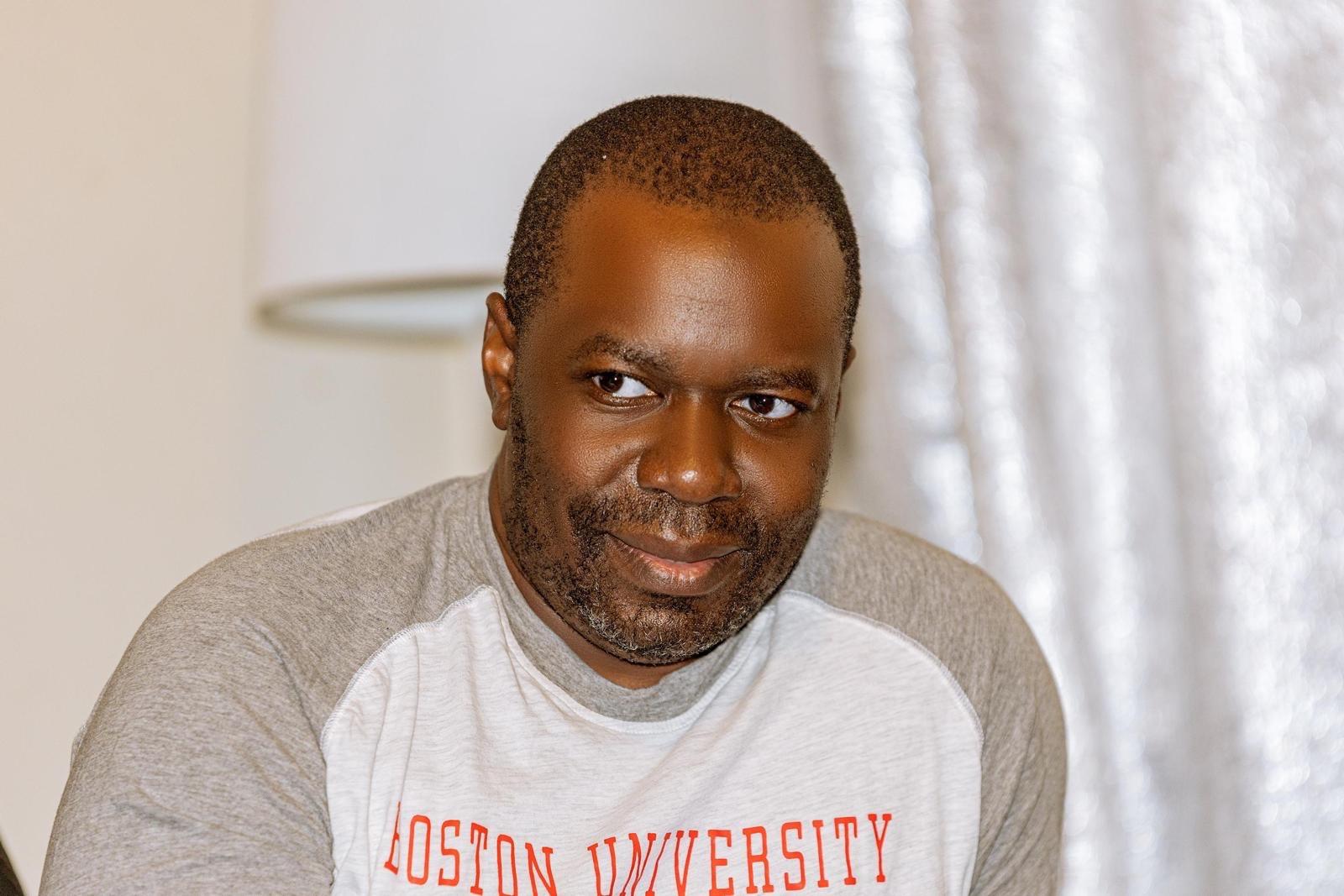
Yasin Kakande is an international journalist, TED Global Fellow, and author of several critically praised non-fiction books, including “Why We Are Coming” and “Slave States,” which offer fresh perspectives on immigration and geopolitics. His journalism career includes contributions to outlets such as The New York Times, Thomson Reuters, Al Jazeera, The National, and The Boston Globe. Yasin holds an MFA in Creative Writing from Emerson College and resides outside Boston.
To learn more about Yasin, click any of the following links:
Amazon Author Profile
Goodreads
BookBub – @yasikak
Instagram – @yasikak
Threads – @yasikak
X – @yasikak
Facebook – @yasikak
Tour Participants:
Visit these other great hosts on this tour for more great reviews, interviews, guest posts, and opportunities to WIN in the giveaway!
Click here to view the Tour Schedule
Enter Now for Your Chance to Win!
This giveaway is hosted by Partners in Crime Tours for Yasin Kakande. See the widget for entry terms and conditions. Void where prohibited.
THE MISSING CORPSE by Yasin Kakande | Gift Card
Can’t see the giveaway? Click Here!
Get More Great Reads at Partners In Crime Tours
Elena Hartwell | Elena Taylor





“Writing The Missing Corpse felt like opening a door you’re not sure you can close again. Sometimes what comes out smiles politely. Other times, it screams and knocks things over.” ~ WOW, I love this!
This was a very powerful guest post. Almost brought tears. 🙁
Thanks so much for sharing!
Thank you for reading, Wendy! And i agree!