
Craniofacial Anatomy and Forensic Identification by Gloria Nusse 
Book & Author Info + My Review + a Giveaway!
Don’t miss any book tour posts. Click the link here for more.
Craniofacial Anatomy and Forensic Identification
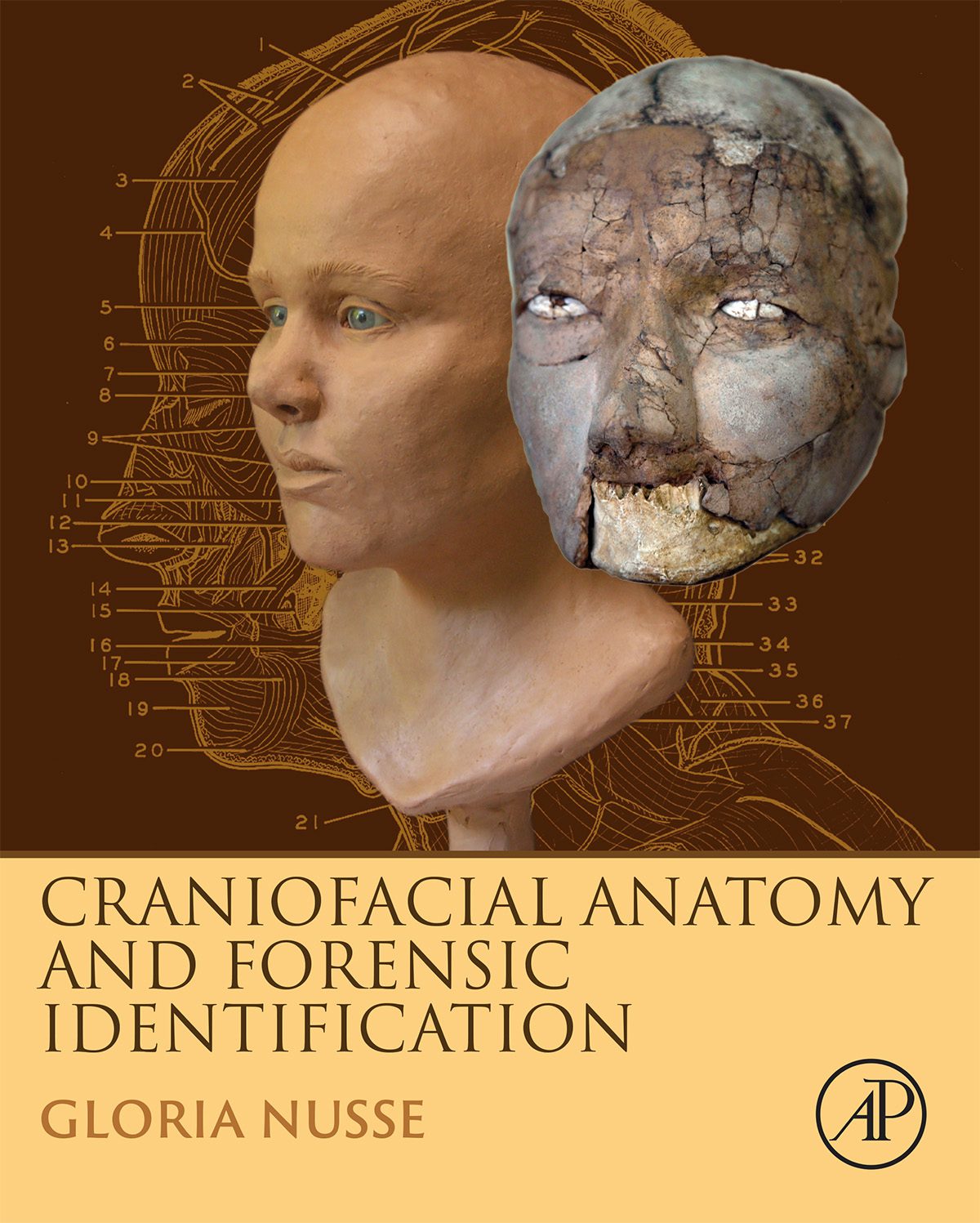
Our bodies record what happens to us physically throughout our lives. This is illustrated by the simple appearance of scars from injuries sustained years, and even decades ago. Evidence such as scars also tells us how we used our joints or may have injured them as children and adults. Our bodies conform to the environment in which we live, both outside and inside. By examining and observing these key clues, a forensic investigator can reveal the unique character that tells the story of a person’s life and death.
Craniofacial Anatomy and Forensic Identification is an atlas that covers all aspects of facial reconstruction and anatomy of the head and neck, such as facial expression and the anatomic basis for facial development, along with the effects of muscle movement. Written by a world-renowned forensic artist with decades of experience as a scientific illustrator as well as a portraitist, anthropologist, and lecturer in anatomy and biology, the author is as much a scientist as an artist.
- Comprehensively addresses the history o facial reconstruction, facial development, muscle movements, and bone physiology used by forensic artists and forensic anthropologists
- Demonstrates techniques in mold making and sculpting to bring the body to life
- Includes images from cadaver labs and recent case studies
- Provides detailed anatomy of vessels and nerves found in the face including the eyes
- Details the muscles, ligaments and tissues down to the skull
- Describes the changing face as it ages
Book Details:
Genre: Non-Fiction, True Crime,
Published by: Academic Press
Publication Date: October 13, 2022
Number of Pages: 302
ISBN: 9780128092880 (ISBN10: 0128092882)
Audience: Forensic Anthropologists, Forensic Artists, Medico-legal Professionals, Forensic Scientists. Graduate Students, Law Enforcement Agencies, and Legal Professionals. Anyone Working In The Field Of Facial Imaging.
To purchase your copy of Craniofacial Anatomy and Forensic Identification, click any of the following links: Amazon | Kindle | Barnes & Noble | ThriftBooks | Goodreads | ScienceDirect | Walmart | Elsevier
My Thoughts on Craniofacial Anatomy and Forensic Identification
As a crime fiction writer, the idea that our bodies record what happens to us physically throughout our lives is fascinating. That’s the premise to Nusse’s nonfiction Craniofacial Anatomy and Forensic Identification, a tremendous resource for a writer. Whether to create a character who uses forensic anthropology or facial reconstruction to solve crimes or just to understand the role of the body in what a detective, or killer, can learn from our muscle, tissues, and bones.
From Kathy Reich’s Temperance Brennan novels to Iris Johanson’s Eve Duncan series, we already know that readers love to discover the role that forensic identification can play in a good mystery.
The book is broken into 10 sections:
- Introduction
- History and research of facial identification
- Bones, muscles, and tissues
- Facial features
- Analysis and interpretation
- Age, archetype, and expression
- Grave goods and artifacts
- Mold making and reproduction
- Clay work and finishing
- Lefty, An exemplar
Each section has useful information for a crime writer. “We are visual hunters,” writes Nusse in section two. Through the overview of the history of facial reconstruction, we discover how long we have been investigating the human form, both in whole, and at its core—the skeleton. Every section prompts a historical mystery, from what happened to Descarte’s skull (if that’s not a short story, I don’t know what is) to tracing human ancestry through the recreation of Neanderthals and other precursors to homo sapiens.
The lexicon of the anatomist is another goldmine. From the terms and standards comes all the information an investigator might glean from bones found at a crime scene or buried in the earth. Does our detective find a parietal bone or an occipital bone? Through description and images, we can invest our crime fiction with accurate details and unique language. Our medical examiners can get the jargon correct, as they explain the remains to the investigator.
Teeth, bones, features. Each segment of the human body comes under the microscope of Nusse’s attention. Can race be identified through a skeleton? It’s more complex than yes or no, but the bones can give clues, helping our detective identify a John Doe. And with the details in this book, get those clues correct.
“One can learn not just the pathological aspects of death but also what the body records about one’s life, which in total can be thought of as a type of profile.” Profiles that can be utilized by the writer to create a character and for a fictional detective to discern the lifestyle and other cues of a victim. There are aspects in here I’ve never considered, which could create a more dynamic crime scene and physical evidence, including what a ME or investigator would identify and point out to a detective.
“Every identification is a story. It is a story told with small bits of information pieced together until the person’s identity emerges.” Isn’t that in fact what crime fiction writers do? We piece together our victim and their killer until we understand why they ended up in conflict.
From Analysis and interpretation, we learn of a specific case. “She received 65 stab wounds and died before she hit the water of the Merced River. Her fingertips had been crudely cut off in an attempt to disguise her identify. The anthropologist placed her age between 22 and 24 years. Her skeleton revealed some wear and tear along her upper arms and scapula that the anthropologist surmised may have come from manual labor.” And one of my favorite details, “Her pelvis along the ischial tuberosity was pitted and rough, bearing the marks of someone who possibly had spent time on a motorcycle or horse.”
I had no idea that kind of information could be found in the bones. What I do know is that I will be investing my police procedurals with much more detailed information from the medical examiner! I can’t wait to get back to the next book, where I can show such wonderfully rich evidence about a character from something as simple as their pelvic bones.
Moving into Age, archetype, and expression, the distinction between stereotype and archetype gave me much food for thought. “A stereotype takes away individual identity by making a predetermined judgement and letting that one judgement carry all others. On the other hand, an archetype is fundamental to individual identity, as it gets to the essence, the beginning, the original form.” What a wonderful way to think about creating character. That we have an original form of a (man, woman, child) and use that as the beginning and essence on which we build.
The section on aging and facial expression, includes a marvelous chart with information about how emotions move the face. Because this is done through the analysis of actual structures of muscle, and tissue, and bone, its accuracy could be applied to expression on a character and what they actually mean. For example, “Happiness: Eyes wrinkle at corners, Mouth lifted into a smile, Cheeks pushed up.” If a character smiles, but the eyes don’t wrinkle, it’s a lie. A lovely detail to add into a character description, and the POV character’s ability to read the situation. By understanding what muscles are put into action based on an emotional response, Nusse can determine what a genuine emotion will look like.
Another detail in this section I found helpful as a writer, is the difference in wrinkles, “static” (they appear when the face is at rest) and “dynamic” (which appear during an expression). In thinking about showing rather than telling a character’s age, this section could be extremely useful.
Artifacts in a grave or on a victim tell a story. What do the items found with a body show the investigator? What’s in your pocket? What jewelry do you wear? “In death if the body is undisturbed, the hair will fall off together in a clump, almost like a wig. When it does, the style is often kept as it was before death” … you can bet that detail is going to show up in one of my novels one day!
All the wonderful and accurate details make this book worthwhile for a writer, especially a crime writer, but the mold making and reproduction, Clay work and finishing, plus the case studies could be the platform from which to create an amazing character. A person who takes a skull and recreates the likeness of a Jane or John Doe. Whether a mass grave at an atrocity or a single victim without a name, the possibilities for applying the knowledge in this book are endless.
While the price tag might keep some writers from buying this book, in my opinion, it’s well worth it. I know I’ll be returning to these pages again and again for inspiration.
Craniofacial Anatomy and Forensic Identification Author Gloria Nusse:
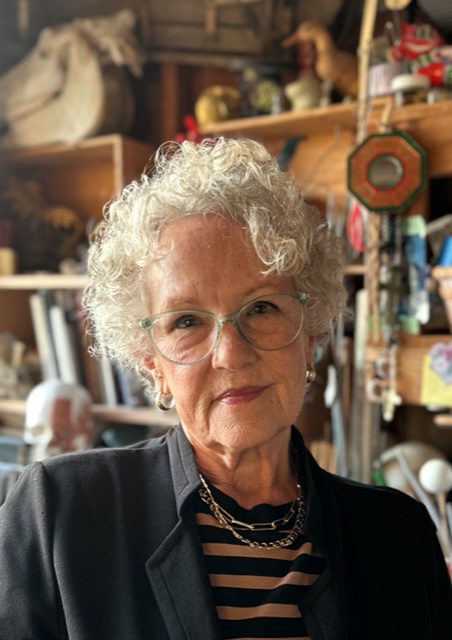
Gloria Nusse is a forensic artist, anatomist and anthropologist. She has aided in identification of unidentified remains and return 14 plus persons to their families. As well she has recreated the faces of ancient peoples of the Middle East, as well as recreations of the crystal skull for National Geographic among others. Her work has been featured on 48 Hours, Forensic Files, Dateline, National Geographic specials, Unsolved History and others. She worked as a scientific artist for over 35 years and has taught human dissection and anatomy at San Francisco State University for 12 years. ( currently Emeritus)
She has authored and co-authored several journal articles and chapters for various publications. She was the invited speaker for the Chalmers Historical Address for the Association of Oral and Maxillary surgeons meeting in 2013.
As well she has taught many workshops for professionals, including the FBI.
Catch Up With Gloria Nusse:
Tour Participants:
Visit these other great hosts on this tour for more great reviews, interviews, guest posts, and opportunities to WIN in the giveaway!
Click here to view the Tour Schedule
Don’t Miss Out! Enter Now for Your Chance to Win!
This giveaway is hosted by Partners in Crime Tours for Gloria Nusse. See the widget for entry terms and conditions. Void where prohibited.
Craniofacial Anatomy and Forensic Identification by Gloria Nusse | Gift Cards
Can’t see the giveaway? Click Here!
Get More Great Reads at Partners In Crime Tours
Elena Hartwell/Elena Taylor





Really great review! I’m so glad you found all this info so useful. It will be interesting if I, as a reader, can pick out any of this in your upcoming books.
Thanks so much for sharing your thoughts.
You have to let me know if you spot anything 🙂