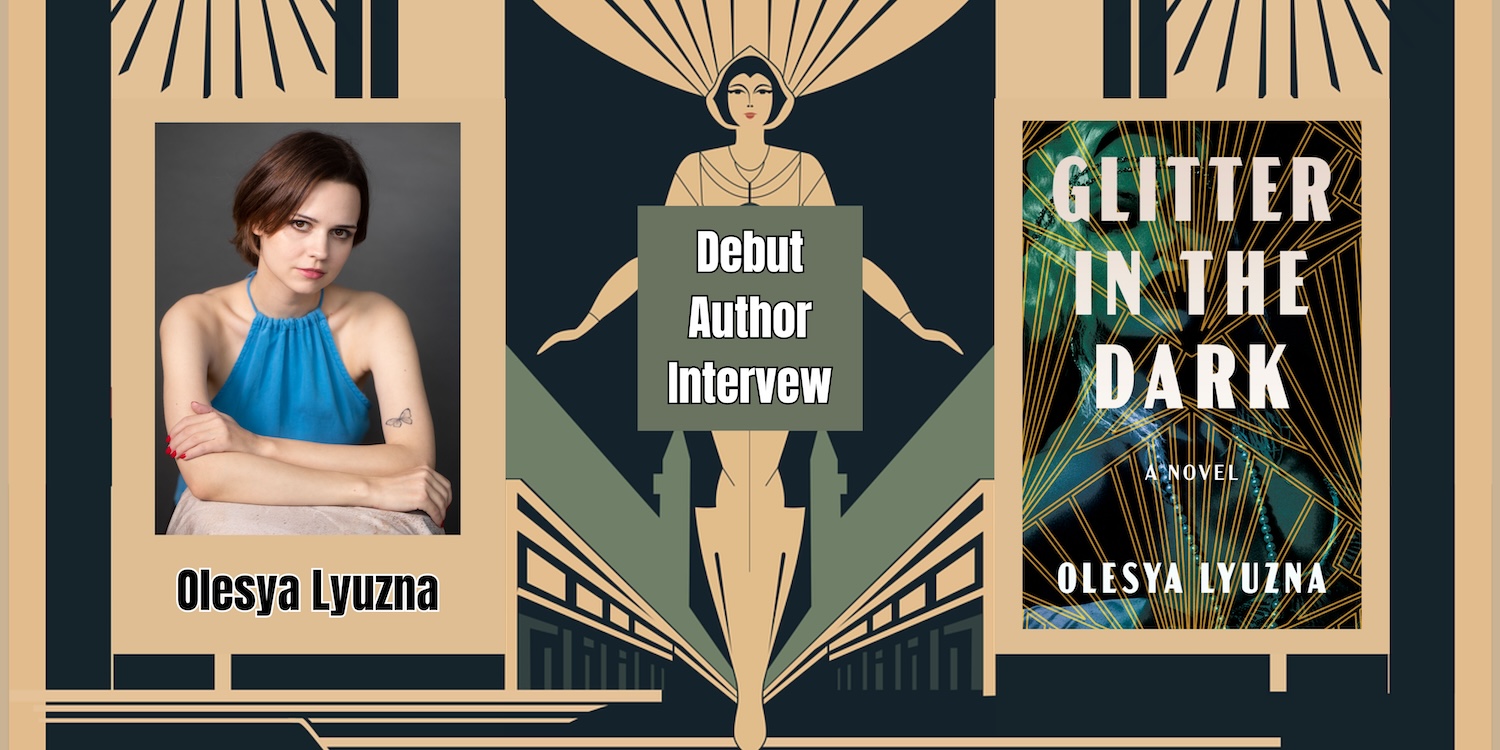
Glitter in the Dark by Olesya Lyuzna
Author Interview + Book & Author Info!
Don’t miss any International Thriller Writer Debut Author Interviews! Click the link here.
Glitter in the Dark
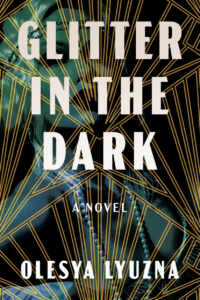
The search for a kidnapped singer in Prohibition-era New York leads an intrepid reporter from Harlem speakeasies to the dazzling world of the theater, all while grappling with her warring passions.
Ambitious advice columnist Ginny Dugan knows she’s capable of more than solving other people’s beauty problems, but her boss at Photoplay magazine thinks she’s only fit for fluff pieces. When she witnesses the kidnapping of a famous singer at Harlem’s hottest speakeasy, nobody takes her seriously, but Ginny knows what she saw—and what she saw haunts her.
Guilt-ridden over her failure to stop the kidnappers and hard-pressed for cash to finally move out of her uptight showgirl sister’s apartment, Ginny resolves to chase down the truth that will clear her conscience and maybe win her a promotion in the process. When private detective Jack Crawford starts interfering with her case, Ginny ropes him into a reluctant partnership but soon finds herself drawn to the kind heart she glimpses beneath his brooding exterior. Equally as alluring is Gloria Gardner, the star dancer of the Ziegfeld Follies who treats life like one unending party. Yet as Ginny delves deeper into the criminal underworld, the sinister plot she uncovers seems to lead right back to the theater.
Then a brutal murder strikes someone close to her, and Ginny realizes the stakes are higher than she ever imagined. This glamorous world has a deadly edge, and Ginny must shatter her every illusion to catch the shadowy killer before they strike again.
Purchase your copy of Glitter in the Dark by click the link Here.
Interview with Olesya Lyuzna — Author of Glitter in the Dark
Glitter in the Dark is set in Prohibition-era New York. What drew you to that era for your debut?
I’ve been drawn to the 1920s for as long as I can remember. Somewhere on the Internet, there’s a video of a teenage me doing the Charleston—but we don’t need to talk about that.
What fascinates me most about the era is the contrast: all that glitter and excess on the surface, masking a lot of darkness underneath. Speakeasies were glamorous but dangerous. Women were pushing boundaries—cutting their hair, going out alone, voting for the first time—but still constantly hemmed in by society. Harlem was bursting with art, culture, and talent—but behind the scenes, many clubs were controlled by white gangsters who imposed racist restrictions on Black performers. There was this constant friction between progress and control, which was incredibly compelling—and the perfect setting for a mystery.
During the pandemic, I found myself deep in a 1920s rabbit hole. I was flipping through old Photoplay magazines, reading vintage advice columns, where I saw an ad for a detective correspondence course squeezed between beauty tips. I started imagining the woman behind the column and what she might secretly want—and that’s where Ginny Dugan was born.
Even though there’s a full century between us and the 1920s, so much felt familiar. Celebrity culture. Impossible beauty standards. The way true crime stories were packaged and sold. The more I read, the more I saw reflections of our own time, just dressed up in sequins.
Old footage of showgirls moving in eerie unison reminded me of how much pressure there was to conform to impossible beauty standards—similar to the uniformity we see today in influencer culture, where faces, bodies, even personalities start to blur. Advice columns back then didn’t hold back either—one casually recommended plastic surgery to a woman insecure about her nose.
And then there’s Celia Cooney, the “Bobbed-Hair Bandit,” who robbed a few grocery stores and was instantly turned into a media obsession. She was glamorized, villainized, sexualized—sometimes all at once. We still do this. Only now, it happens faster.
Glitter in the Dark centers on Ginny Dugan. What would you like readers to know about her?
Ginny is 23, headstrong, and stuck writing an advice column she doesn’t believe in. Her dream is to become a serious reporter, but for now, she’s flipping a color wheel and answering letters to move beauty products for the magazine’s advertisers.
She only comes alive at night—dancing at speakeasies, chasing leads, and trying to track down the elusive Josephine Hurston, a Harlem torch singer who always performs veiled. When Ginny witnesses Josephine’s kidnapping during a police raid—and narrowly survives an attempt on her own life—the story becomes personal. She sets out to solve the case, both for Josephine and for herself.
Writing Ginny was cathartic. She’s chaotic, stubborn, occasionally reckless—but she speaks her mind and doesn’t back down from a fight. She’s constantly pushing against what’s expected of her. That felt honest to me—especially as a woman trying to carve space for herself in a world that often has other plans.
Though the book is a mystery, it’s also a coming-of-age story. Ginny’s figuring out who she is, what kind of life she wants, and how to take up space in the world—even if she has to kick down a few doors along the way.
Glitter in the Dark incorporates speakeasies and the theater and the underworld of NYC nightlife. What was your research process like for those aspects of the novel?
It started with cultural history—books like The Modern Temper and Terrible Honesty gave me a strong sense of the era’s contradictions: modern and archaic, glamorous and bleak, radical and conservative. Then I dove into Harlem Renaissance literature—Jessie Fauset, Nella Larsen, Claude McKay, Langston Hughes—trying to immerse myself in the textures of daily life, beyond the big historical headlines.
Because so much of the book takes place in nightclubs, I read a lot about Prohibition and speakeasies—how they worked, how they were raided, and what kinds of people passed through them. I visited The Back Room in New York, one of the few surviving speakeasies from that era. You have to find it through a hidden alley, and they still serve drinks in teacups. It was kind of magical. The vibe is obviously different now—less danger, more novelty—but the atmosphere still holds a flicker of that old thrill, like you’ve slipped sideways into another time.
I also got really interested in the darker side of the era’s drinking culture. Bootleg liquor wasn’t just illegal—it was dangerous. People went blind or died from dirty gin. And then there was Jamaica Ginger, a medicinal alcohol substitute that caused paralysis. I wanted to show that the danger wasn’t just coming from the gangsters—it was right there in your glass!
And because I love writing through all five senses, I tracked down a sampler of 1920s perfumes—Guerlain’s Shalimar, which launched in 1925, quickly became the unofficial scent of Glitter in the Dark. The modern formula isn’t quite the same, but one whiff and I was there: velvet curtains, cigarette smoke, champagne coupes…. It was like time travel in a bottle!
Tell us about the process for getting your first (two-book!) deal.
It all started in 2020, during the height of the pandemic. I had just finished writing Glitter in the Dark when I was selected for Pitch Wars, a now-retired mentorship program that paired established writers with beginners. I got to work with Layne Fargo and Halley Sutton, both brilliant writers who know how to write difficult women better than anyone. They helped me bring out the darker, sexier layers of the story—elements that were already there, just waiting to be dialed up.
We revised the book twice in a whirlwind three-month sprint. I signed with my agent shortly after, and then we went out on submission. What followed were three long, quiet years. Lots of waiting, revising, and resisting the urge to refresh my inbox every five minutes.
Eventually, the book landed at Mysterious Press, and I couldn’t have asked for a better home. My editor, Luisa Cruz Smith, immediately understood what I was trying to do with the story—her vision aligned with mine in a way that felt both rare and exciting. The process has been collaborative and creatively energizing from the start. Even better, the deal ended up being for two books, and I’m currently working on the sequel. I’m thrilled I get to spend more time in Ginny’s world!
If there’s a takeaway here, it’s this: publishing is slow, weird, and wildly unpredictable. But if you can stay focused on the work and surround yourself with people who get it, you’ll make it through. Maybe even with your sanity intact (but no promises!).
What can we find you doing when you aren’t writing?
Going to the movies. I’m a devoted cinephile and a big fan of Toronto’s heritage theatres—especially the Revue and the Paradise. There’s something almost spiritual about sitting in the dark with a bunch of strangers, all drawn there by the same story. It never gets old.
Right now I’m deep into the Silent Film Festival. One of my favorites so far has been Salomé (1922) with Alla Nazimova, which reportedly featured an entirely queer cast. It’s surreal, visually stunning, and totally ahead of its time.
I’m also a murder mystery party enthusiast. I started hosting them a few years ago, and I take them very seriously—costumes, character backstories, the works. It’s basically collaborative storytelling in real time, and one day I’d love to design my own mystery games.
When I’m not doing that, I’m probably outside. I try to spend as much time in nature as possible during the warmer months. And I’m a bit of a Pilates obsessive—it keeps me grounded (and also offsets all the movie popcorn).
What’s the best book you’ve read recently?
I’ve been doing a lot of cult research for my next novel, and Godshot by Chelsea Bieker completely blew me away. The prose is radiant and strange, and the way she writes about belief and mother-daughter dynamics is both tender and devastating. It’s one of those books where you can feel how much joy the author took in writing it—it just radiates off the page.
I also loved Cross My Heart by Megan Collins. It’s about a woman who becomes obsessed with the husband of her heart donor, and it’s kind of unhinged in the best way. The narrator’s voice is sharp, unreliable, and compelling, and the book plays with the “lover girl” trope in a way that feels fresh and nuanced. It’s smart, voicey, and delightfully uncomfortable.
What do you hope readers take away from Glitter in the Dark?
First, I hope it sparks curiosity—about the 1920s, the hidden corners of history, and the people who don’t usually get center stage in the textbook version of the decade. Queer lives. Working-class artists. Women trying to get free in a world that kept narrowing the walls.
I also hope readers connect with Ginny’s refusal to sit down and shut up. She makes a mess of things, sure—but she doesn’t give up. She fights for what she believes in. And even when it feels hopeless, she keeps moving.
And maybe most of all, I hope it offers a kind of comfort. I’ve often turned to books during difficult times, and there’s something about noir that feels especially right for that. It doesn’t promise a happy ending—but it does promise survival. Noir understands that the world can be cruel and unfair, and still insists on pushing forward. That feels honest to me. Reassuring, even. Like: yes, everything’s on fire, but you’re still here. Still standing. Still lighting a cigarette with last night’s match. And that counts for something.
Olesya Lyuzna — Author of Glitter in the Dark
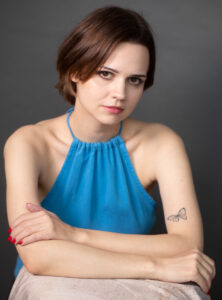 Olesya Lyuzna is a Toronto-based author with one fatal flaw: she can’t resist a good mystery.
Her debut novel, Glitter in the Dark, follows an advice columnist on the hunt for a missing torch singer, all while navigating forbidden feelings for a Ziegfeld showgirl in 1920s New York.
Selected for a Pitch Wars mentorship by Layne Fargo and Halley Sutton, Glitter in the Dark is the first in a planned series that reimagines classic noir in the glittering, smoky world of the 1920s through a queer, female-driven lens.
When she’s not writing, you’ll find Olesya hosting murder mystery parties, haunting Toronto’s historic movie theatres, and scouring the archives for unsolved crimes.
To find out more about Olesya, click on either of her social media links: Website, Instagram.
Elena Hartwell/Elena Taylor
Header image from Pixabay